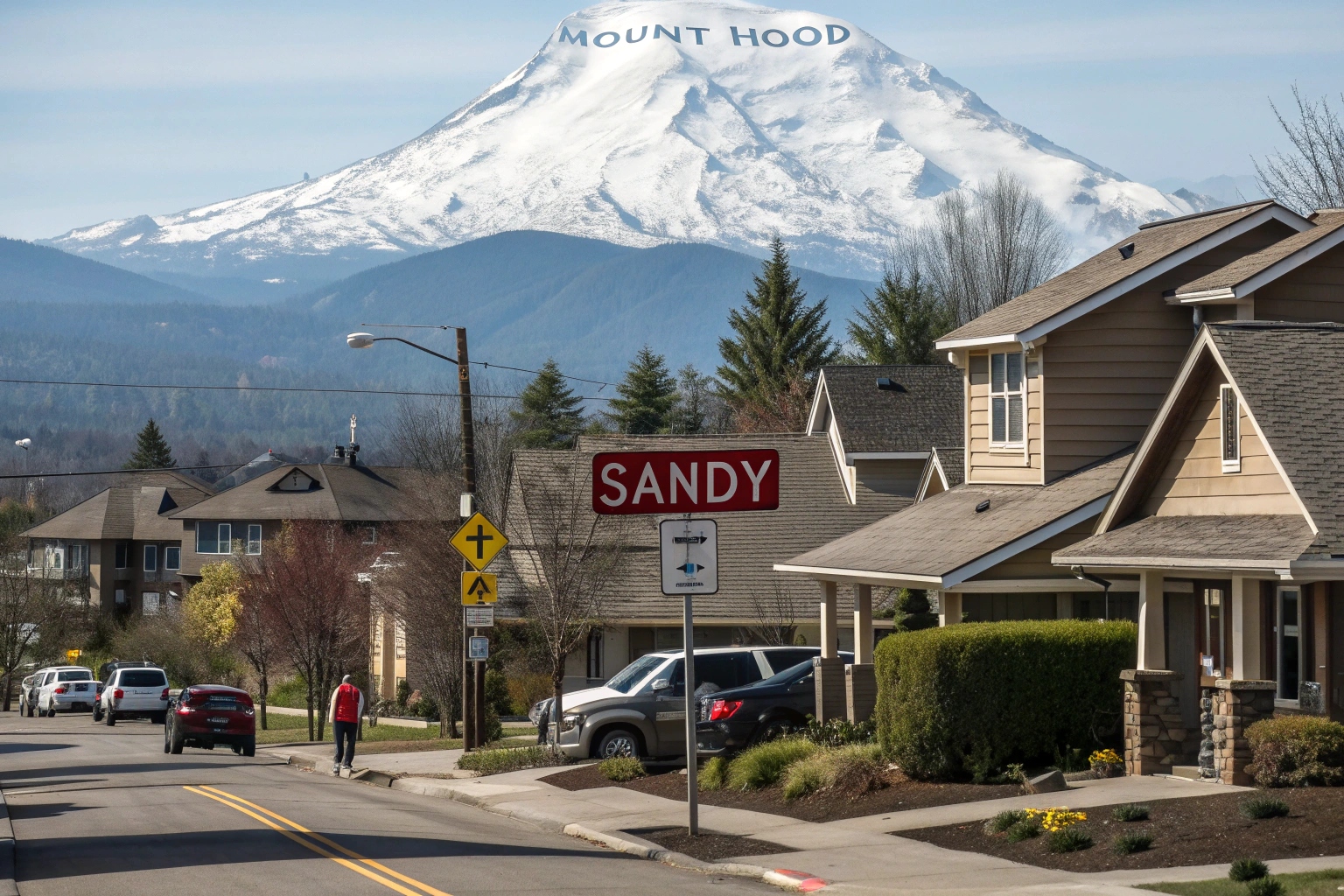
Nestled at the western base of Mount Hood, Sandy, Oregon combines small-town charm with spectacular mountain views. Yet this picturesque setting comes with a unique responsibility: living in the shadow of the Cascade Range’s tallest peak means preparing for the volcanic hazards that have shaped this landscape for millennia. While Mount Hood’s majestic presence defines the region’s identity, it also represents a dormant—but not extinct—volcanic system that continues to influence community planning, property development, and emergency preparedness throughout the Sandy area.
As restoration professionals serving communities throughout Oregon, we understand how geological hazards require specialized preparation and response strategies. Whether you own property in Sandy, are considering investing in the area, or simply want to understand this community’s relationship with its iconic but potentially hazardous neighbor, this exploration offers valuable insights into volcanic risk assessment, property protection, and restoration considerations for this distinctive region.
Mount Hood’s Volcanic Reality: Understanding the Risk
Before examining Sandy’s specific vulnerabilities and preparations, it’s important to understand Mount Hood’s volcanic nature:
Mount Hood’s Eruptive History
Mount Hood’s geological record reveals a complex volcanic history:
- Recent Activity: The last major eruptive period occurred in the 1790s, just before Lewis and Clark’s expedition
- Eruption Style: Mount Hood typically produces relatively small eruptions compared to Mount St. Helens
- Activity Pattern: The mountain tends toward dome-building eruptions rather than catastrophic explosions
- Precursory Signs: Increased earthquake activity, ground deformation, and gas emissions typically precede eruptions
- Ongoing Monitoring: The USGS Cascades Volcano Observatory continuously monitors Mount Hood for signs of unrest
Local Impact: While a catastrophic Mount St. Helens-style eruption is considered unlikely, even smaller eruptive events could significantly impact Sandy and surrounding communities through lahars (volcanic mudflows), ashfall, and secondary effects.
Sandy’s Specific Volcanic Hazards
Sandy faces several distinct volcanic hazards based on its location:
Lahar Risk: The Primary Concern
Lahars—fast-moving volcanic mudflows—represent the most significant threat to Sandy:
- Mount Hood has produced numerous lahars throughout its history
- Sandy sits in the Sandy River drainage basin, a natural lahar pathway
- Historic lahars have traveled over 50 miles from Mount Hood
- Lahars can move at speeds of 20-40 mph, leaving little time for evacuation
- These flows can carry massive boulders, trees, and debris
Geological Evidence: Geologists have identified multiple lahar deposits throughout the Sandy River valley, indicating that these events have repeatedly affected the area where Sandy now stands.
Ashfall Considerations
While less immediately catastrophic than lahars, volcanic ash presents significant challenges:
- Ashfall can impact air quality, causing respiratory issues
- Even thin ash layers can damage mechanical systems and vehicles
- Ash combined with rainfall creates heavy loads on roofs and structures
- Cleanup requirements are extensive and specialized
- Fine ash particles can penetrate buildings, affecting interior spaces
Restoration Perspective: Volcanic ash differs significantly from wildfire ash. It contains sharp, glass-like particles that can damage surfaces during cleanup if improper techniques are used.
Secondary Hazards
Several secondary effects could impact Sandy following volcanic activity:
- Flooding: Volcanic events can melt snow and ice, causing downstream flooding
- Landslides: Volcanic activity can trigger landslides in unstable areas
- Infrastructure Disruption: Roads, power, and water systems could be affected
- Economic Impacts: Tourism and business interruptions
- Air Quality Issues: Beyond ash, volcanic gases can affect regional air quality
Historical Context: During the 1980 Mount St. Helens eruption, communities at similar distances experienced significant secondary effects even without direct physical damage from the eruption itself.
Sandy’s Volcanic Preparedness: Community-Level Response
Rather than ignoring its volcanic neighbor, Sandy has developed several approaches to reduce risk and improve resilience:
Hazard Identification and Mapping
Sandy has worked with state and federal agencies to identify its specific risk areas:
- Detailed lahar inundation zone mapping
- Evacuation route planning based on flow modeling
- Critical infrastructure vulnerability assessments
- Time-arrival estimates for different scenarios
- Public hazard communication tools
Implementation Example: The city has integrated these hazard maps into its comprehensive planning process, informing decisions about public facility locations and emergency response resources.
The Sandy Volcano Response Plan
Developed in coordination with Clackamas County and state emergency management, this plan includes:
- Monitoring and Alert Protocols: Coordinated with USGS volcano monitoring
- Multi-Stage Warning System: Based on escalating levels of volcanic activity
- Evacuation Zone Designation: Pre-identified areas for phased evacuation
- Shelter Location Planning: Sites positioned outside hazard zones
- Resource Staging Areas: Locations for emergency response equipment
Practical Application: This plan is regularly exercised through tabletop drills and community education events, ensuring both officials and residents understand their roles during a volcanic event.
Infrastructure Adaptations
Sandy has gradually modified its infrastructure with volcanic hazards in mind:
- Critical Facilities Placement: Locating new emergency services facilities outside lahar zones
- Bridge Reinforcement: Enhancing structures that might be affected by lahars
- Water System Redundancy: Developing backup water sources in case of disruption
- Communications Resiliency: Ensuring multiple communication pathways for alerts
- Power System Hardening: Working with utilities to increase electrical system resilience
Restoration Perspective: These infrastructure adaptations significantly improve the community’s ability to recover quickly after an event, as critical systems are more likely to remain operational.
Property-Level Considerations: Living with Volcanic Risk
For property owners in Sandy, volcanic risk management involves several specialized considerations:
Location-Specific Risk Assessment
Pro Tip: Property location is the single most important factor in determining volcanic risk in Sandy. Before purchasing or developing property, consult USGS hazard maps to understand your specific location relative to lahar zones and other hazard areas.
Key assessment factors include:
- Elevation relative to potential lahar pathways
- Distance from drainages connecting to Mount Hood
- Evacuation route access and options
- Historical evidence of past volcanic impacts in the area
- Soil types that might indicate past lahar or ashfall deposits
Cost Perspective: Properties within identified lahar zones often carry additional insurance considerations and may face more rigorous building requirements, potentially affecting both purchase and operating costs.
Building Adaptations for Volcanic Hazards
While no residential construction can withstand direct lahar impact, several construction approaches can improve resilience to ashfall and secondary effects:
- Roof Design: Steeper roof pitches prevent ash accumulation
- Filtration Systems: Enhanced air filtration to mitigate ash and gas infiltration
- Structural Reinforcement: Additional roof support to handle ash loading
- Water Collection Protection: Covered water collection systems to prevent contamination
- Mechanical System Protection: Designs that shelter HVAC equipment from ash exposure
Restoration Insight: In our post-disaster assessments, buildings with these adaptations typically experience 30-50% less damage from ashfall and other volcanic impacts compared to standard construction.
Practical Preparedness Measures
Sandy homeowners have implemented various practical approaches:
- Household Evacuation Plans: Developing and practicing family evacuation procedures
- Go-Bag Preparation: Maintaining ready-to-grab emergency supplies
- Document Protection: Securing important documents in water/ash-resistant containers
- Communication Planning: Establishing out-of-area contacts and meeting locations
- Insurance Review: Ensuring coverage adequately addresses volcanic hazards
Safety Warning: In the event of a lahar warning, immediate evacuation is the only effective protection. No structure in a lahar path should be considered safe for shelter.
Special Considerations for Historic Properties
Sandy’s historic buildings present unique volcanic preparedness challenges:
- Original woodwork and finishes are particularly vulnerable to ash damage
- Historic drainage systems may be inadequate for ash-laden rainfall
- Vintage heating and ventilation systems often lack adequate filtration
- Original roofing may not support additional ash loading
- Historic preservation requirements may limit modification options
Restoration Perspective: We’ve developed specialized approaches for protecting and restoring historic properties affected by volcanic ash that preserve original materials while implementing effective cleaning techniques.
Portland Area Context: The Regional Impact
While Portland isn’t directly in Mount Hood’s primary hazard zones, the connection is more significant than many realize:
- Ashfall Potential: Depending on wind patterns, Portland could experience significant ashfall
- Economic Interconnection: Disruption to Highway 26 would affect regional commerce
- Water Supply Vulnerability: Bull Run watershed could be impacted by ash or volcanic activity
- Evacuation Support: Portland would likely serve as a major evacuation destination
- Resource Deployment: Portland’s emergency resources would be critical to regional response
Local Insight: Property owners throughout the Portland metro area should consider basic volcanic ash preparedness, particularly for HVAC systems and roof maintenance.
The Restoration Process: Recovering from Volcanic Impacts
Understanding what happens after a volcanic event is crucial for property owners:
Ashfall Cleanup and Restoration
Volcanic ash requires specialized cleanup approaches:
- Safety Assessment: Evaluating structural integrity and air quality before re-entry
- Containment Procedures: Using specialized techniques to prevent ash from spreading
- Proper Equipment: Utilizing HEPA filtration and protective gear during cleanup
- Methodical Cleaning Sequence: Following specific order-of-operations for effective ash removal
- System Restoration: Cleaning and restoring HVAC, plumbing, and electrical systems
Restoration Challenge: Volcanic ash is highly abrasive and can damage surfaces during removal if improper techniques are used. Professional restoration utilizes specialized equipment and approaches to prevent secondary damage.
Lahar Damage Restoration
For properties affected by lahars or flooding, restoration is more complex:
- Structural Evaluation: Engineering assessment of structural integrity
- Material Testing: Analysis for contaminants and hazardous materials
- Selective Demolition: Removal of unsalvageable materials
- Specialized Cleaning: Addressing mineral deposits and contaminants
- Reconstruction: Rebuilding with improved resilience measures
Critical Timing: Properties affected by lahars require immediate professional assessment, as these flows often contain chemical compounds that can cause progressive damage if not properly addressed.
Insurance and Recovery Planning
Effective recovery depends on proper preparation:
- Understanding specific policy coverage for volcanic events
- Documenting pre-event property condition
- Maintaining detailed inventory of contents
- Establishing relationship with restoration professionals before an event
- Developing business continuity plans for commercial properties
Restoration Perspective: Properties with thorough pre-event documentation and established professional relationships typically experience 40-60% faster insurance claim processing and recovery times.
The Pacific Water & Fire Restoration Difference
Our team brings specialized expertise to volcanic impact scenarios throughout Oregon:
- Volcanic Ash Training: Our technicians are specifically trained in proper volcanic ash cleanup procedures
- Specialized Equipment: We maintain HEPA filtration systems and protective gear designed for volcanic ash
- Content Restoration Expertise: Our specialized cleaning techniques can restore ash-affected belongings
- Historic Property Experience: We’ve developed methods specific to historic buildings affected by ash
- Insurance Coordination: We work directly with your insurance company to ensure comprehensive coverage
Restoration Philosophy: We understand that each property has unique characteristics and value. Our approach focuses on preserving what’s important while implementing effective restoration techniques.
Preparing Your Property: Practical Next Steps
Inspired by Sandy’s community preparedness, here are practical steps property owners throughout the region can take:
Immediate Actions (Next 30 Days)
- Determine Your Risk Zone: Review USGS hazard maps to understand your property’s specific volcanic risk profile
- Create a Family Emergency Plan: Establish evacuation routes, meeting points, and communication procedures
- Prepare Emergency Supplies: Assemble essential items, including respiratory protection
- Document Your Property: Take detailed photos/videos and maintain offsite records
- Review Insurance Coverage: Specifically check for volcanic event coverage and exclusions
Medium-Term Projects (1-6 Months)
- Roof Inspection: Have your roof evaluated for ash load capacity and drainage
- HVAC System Assessment: Consider adding or upgrading filtration systems
- Emergency Power Planning: Evaluate options for backup power during extended outages
- Water Storage Solutions: Implement protected water storage for emergency use
- Community Connection: Join or form a neighborhood emergency response group
Long-Term Preparations (6-24 Months)
- Structural Improvements: Consider roof reinforcement during your next roof replacement
- Filtration Upgrades: Install whole-house air filtration systems during HVAC replacements
- Landscape Design: Implement features that could divert small debris flows around structures
- Safe Room Designation: Create a room with enhanced air filtration and emergency supplies
- Business Continuity Planning: For commercial properties, develop comprehensive plans for operation during volcanic events
Looking Forward: Living with Volcanic Risk
Sandy’s approach demonstrates that communities can thrive alongside volcanic hazards through preparation, education, and adaptive planning:
The Evolving Understanding
Scientific understanding of Mount Hood continues to improve:
- Advanced monitoring provides better early warning capabilities
- New modeling offers more precise hazard zone mapping
- Historical research reveals more about past eruptive patterns
- Engineering developments create more resilient building approaches
- Community science initiatives engage residents in monitoring and preparation
The Balance of Risk and Reward
Sandy’s experience highlights how communities make conscious choices to inhabit beautiful but potentially hazardous landscapes:
- Acknowledging rather than ignoring risks
- Implementing reasonable precautions while avoiding alarmism
- Appreciating the geological processes that created the stunning landscape
- Finding the balance between preparation and everyday living
- Building community connections that enhance resilience
When Disaster Strikes: We’re Here to Help
Whether you’re interested in proactive measures to protect your property or need assistance after a volcanic event, our team brings specialized expertise to these unique restoration scenarios. Our goal is not just to restore properties after damage occurs, but to help build more resilient communities that can better withstand Mount Hood’s potential hazards.
Emergency Restoration? Call Now: 503-201-7337
For immediate assistance with any property damage, our emergency response team is available 24/7.
For a free volcanic hazard assessment or more information about our specialized restoration services, contact Pacific Water & Fire Restoration today.
Pacific Water & Fire Restoration is a trusted leader in the restoration industry, serving Portland, Sandy, and surrounding communities with professional water, fire, mold, and storm damage restoration services. Our IICRC-certified professionals are available 24/7 to respond to your emergency restoration needs.