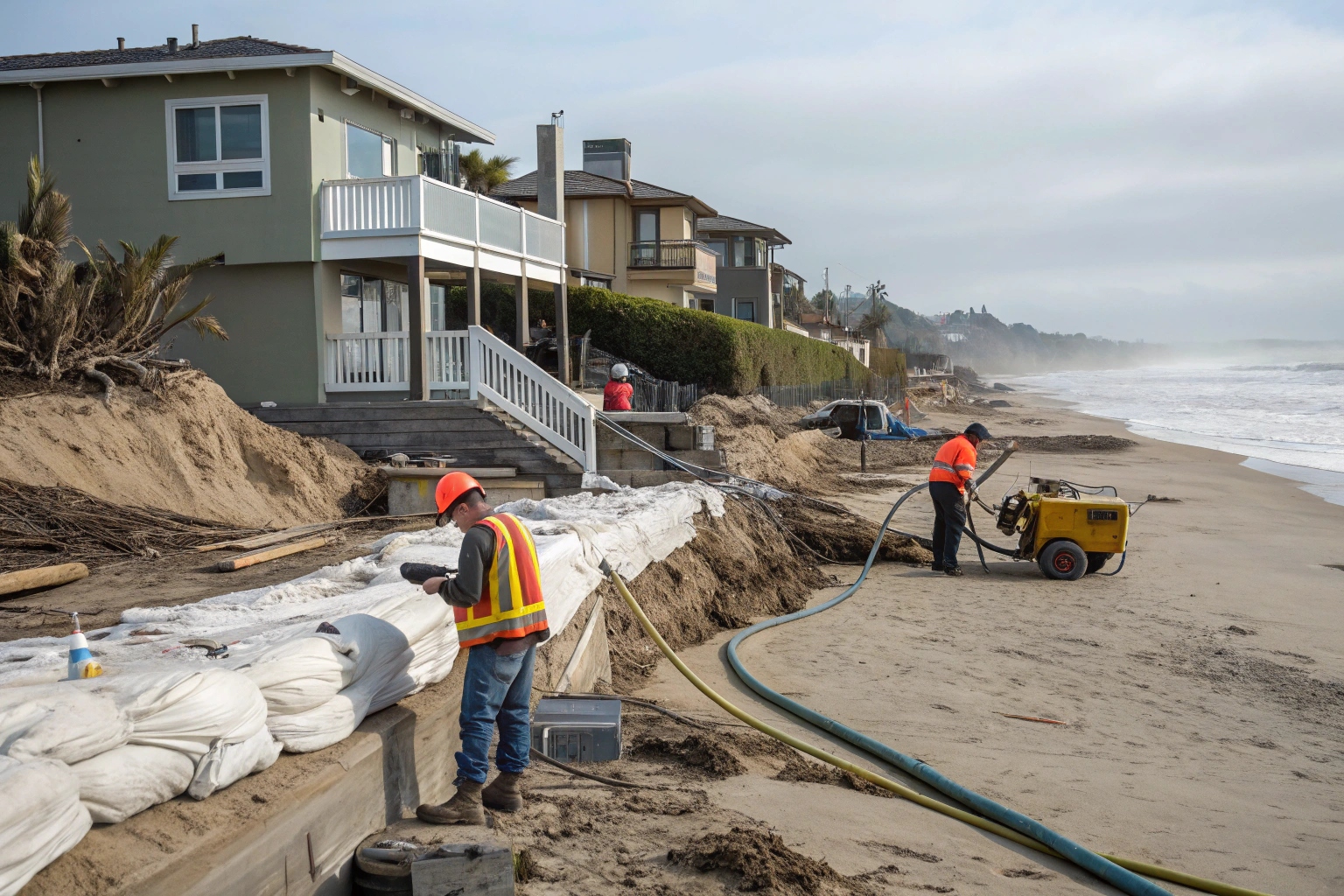

Along Oregon’s picturesque northern coast, Seaside has long been one of the state’s most beloved beach destinations. With its historic promenade, expansive beaches, and charming coastal atmosphere, Seaside has attracted visitors and residents for generations. Yet beneath this postcard-perfect exterior lies a persistent challenge: coastal erosion is actively reshaping Seaside’s shoreline, threatening properties and infrastructure while challenging the community’s relationship with its iconic beaches.
As restoration professionals serving the Pacific Northwest, we understand that coastal property owners face unique challenges. Erosion isn’t just a distant environmental concern—it’s a practical threat to property values, structural integrity, and community infrastructure. In this article, we’ll explore how coastal erosion is impacting Seaside, what property owners should know, and practical steps to protect coastal investments.
Understanding Coastal Erosion: A Natural Process with Growing Concerns
Coastal erosion is the gradual wearing away of land and the removal of beach sediment by wave action, tidal currents, wave currents, and drainage. While it’s a natural process that has shaped Oregon’s coastline for millennia, several factors have accelerated erosion rates in recent decades:
- Rising Sea Levels: Global sea levels have risen approximately 8-9 inches since 1880, with the rate accelerating in recent decades. The Oregon coast is experiencing sea level rise of about 2.3mm per year.
- Increasing Storm Intensity: Climate research indicates that winter storms along the Pacific Northwest coast are becoming more intense, generating larger waves that cause more significant erosion events.
- Human Development: Coastal structures like jetties, seawalls, and harbor developments can disrupt natural sand migration patterns, often intensifying erosion in adjacent areas.
- Loss of Natural Buffers: Development has removed natural dune systems and vegetation that once served as buffers against wave action.
Local Impact: In Seaside specifically, studies have documented average erosion rates of 1-3 feet per year in certain areas, with significantly higher rates during major storm events.
Seaside’s Unique Erosion Challenges
Seaside’s geography creates several specific erosion concerns that distinguish it from other coastal communities:
The Necanicum River Dynamic
The Necanicum River meets the Pacific Ocean at Seaside’s northern edge, creating a dynamic estuary system. This river mouth naturally migrates, and during winter storms, its interaction with ocean currents can accelerate erosion, particularly along the Promenade area.
The Promenade Vulnerability
Seaside’s historic 1.5-mile Promenade, built in 1920, has become increasingly vulnerable to erosion and storm damage. During major winter storms in 2020 and 2021, sections of the Promenade suffered significant damage as waves overtopped the seawall.
Historical Insight: The original Promenade seawall was built approximately 150 feet further inland than the current structure. This illustrates how dramatically the shoreline has changed over just a century.
Northern Seaside’s Critical Erosion Zone
The northern section of Seaside has experienced some of the most dramatic erosion. Properties in this area, particularly those near the Necanicum River mouth, have faced increasing threats:
- The 12th Avenue beach access point has required multiple repairs due to erosion damage
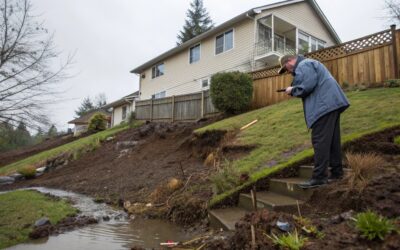
- Several properties along North Promenade have lost significant portions of their yards
- Beach access stairways have been repeatedly damaged or destroyed
- Protective riprap has been undermined during major storm events
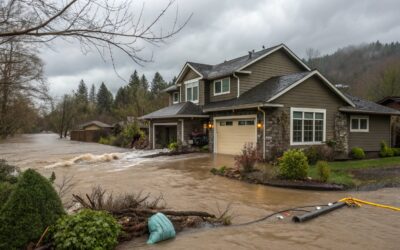
Restoration Perspective: Our team has responded to numerous water damage events in this area where storm surge combined with high tides has breached protective structures and damaged properties.
Beach Narrowing and Dune Loss
Seaside’s wide, sandy beaches have historically provided natural protection against storm surge. However, in recent decades, the beaches have narrowed significantly in some areas. Natural dune systems, which once served as the first line of defense against storm waves, have been lost to development or erosion.
Historic Storm Impacts: Learning from the Past
Examining past storm events provides valuable insights into Seaside’s vulnerabilities and the practical implications for property owners:
The Great Coastal Gale of 2007
This massive storm system battered the Oregon coast for three days with hurricane-force winds and record-breaking rainfall. In Seaside, the storm caused:
- Significant damage to the Promenade seawall
- Flooding in downtown areas as storm surge pushed up the Necanicum River
- Multiple homes and businesses suffering water damage
- Severe beach erosion that took years to naturally recover
Property Impact: Several oceanfront properties lost up to 15 feet of protective dune during this single event.
January 2021 King Tide Storm
More recently, a January 2021 storm coincided with king tides to cause substantial erosion:
- Waves overtopped the Promenade seawall in multiple locations
- Several beach access points were severely damaged
- Properties along North Promenade experienced flooding and erosion damage
- Emergency riprap installation was required to protect threatened structures
Restoration Challenge: Properties that had implemented proper drainage systems and erosion barriers generally experienced less damage than those without these protections.
Scientific Projections: What Coastal Property Owners Should Know
Understanding the scientific projections for Oregon’s coastline can help property owners make informed decisions:
Sea Level Rise Projections
The Oregon Climate Change Research Institute projects that by 2050, sea levels along Oregon’s northern coast could rise by 1.5 to 3 feet, with potential increases of 4 to 6.6 feet by 2100.
For Seaside property owners, this translates to:
- Increased frequency of flooding during high tides
- Accelerated erosion of protective beaches and dunes
- Greater storm surge penetration inland
- Higher groundwater tables causing drainage issues
Increased Storm Frequency and Intensity
Climate models consistently indicate that winter storms affecting the Oregon coast are likely to become more intense. This doesn’t necessarily mean more storms, but rather that the storms that do occur will likely produce:
- Larger waves
- Higher storm surge
- More intense rainfall
- Longer duration impacts
Practical Implication: Properties that might have been considered safely set back from erosion threats a decade ago may now face accelerating risks.
Protective Measures: What Property Owners Can Do
Despite these challenges, coastal property owners aren’t helpless against erosion. Several proven strategies can significantly reduce risks:
Site-Specific Erosion Assessment
Pro Tip: Before implementing any protective measures, invest in a professional erosion assessment specific to your property. Erosion risks can vary dramatically even between adjacent properties based on elevation, drainage patterns, and other factors.
This assessment should include:
- Historical erosion rate analysis
- Site-specific vulnerability factors
- Projected timeline of erosion threats
- Cost-benefit analysis of different protection options
Natural Infrastructure Solutions
Working with natural processes often provides more sustainable protection than fighting against them:
- Dune Restoration: Rebuilding and vegetating dunes provides a natural buffer against storm waves
- Beach Nourishment: Adding compatible sand to beaches can offset erosion losses
- Living Shorelines: Using native vegetation and natural materials to stabilize shorelines
- Managed Retreat: In some cases, relocating structures further from the shoreline may be the most cost-effective long-term solution
Restoration Insight: Properties with healthy, vegetated dunes typically experience 30-60% less erosion damage during major storms compared to those with hardened structures like seawalls.
Structural Protection Options
In situations where natural solutions aren’t sufficient, structural protection may be necessary:
- Drainage Improvements: Proper drainage is critical to prevent saturation that accelerates erosion
- Riprap Revetments: Strategically placed stone barriers can dissipate wave energy
- Seawalls: Vertical walls designed to withstand wave impact
- Bulkheads: Retaining walls designed primarily to hold soil in place
Important Note: All structural protection measures in Oregon require permits from multiple agencies, including the Oregon Department of State Lands and the U.S. Army Corps of Engineers. Unpermitted structures can result in significant fines.
Building Adaptation Strategies
Modifying structures themselves can significantly improve resilience:
- Elevated Foundations: Raising structures above potential flood levels
- Flood-Resistant Materials: Using materials designed to withstand temporary submersion
- Removable Flood Barriers: Deployable systems to protect openings during storms
- Erosion-Resistant Landscapes: Designing property landscaping to channel water away from vulnerable areas
Cost Perspective: While adaptation measures represent significant investments, they’re typically far less expensive than emergency repairs after damage occurs. Data from coastal communities shows that every $1 spent on adaptation typically saves $4-7 in damage costs.
Portland Area Context: Indirect Impacts
While Portland isn’t directly affected by coastal erosion, the cascading effects impact the entire region:
- Infrastructure Connections: Critical highways connecting Portland to coastal communities (like US-26 and Highway 101) are increasingly vulnerable to erosion and landslides
- Economic Linkages: Coastal tourism and industry disruptions affect Portland’s economy
- Insurance Markets: Changing coastal risks influence insurance availability and costs throughout Oregon
- Emergency Resources: Major coastal disasters can strain emergency resources statewide
Local Insight: Many Portland residents own coastal vacation properties in Seaside and other coastal communities. These investments face increasing risks that require specialized knowledge to manage effectively.
Community-Level Response: Beyond Individual Properties
Seaside has implemented several community-level initiatives that complement individual property protection:
Seaside’s Comprehensive Erosion Management Plan
In 2019, Seaside adopted a Comprehensive Erosion Management Plan that includes:
- Regular beach profile monitoring
- Critical infrastructure protection priorities
- Emergency response protocols for erosion events
- Long-term adaptation strategies for public facilities
Necanicum Estuary Management
Collaborative efforts between the city, county, and state agencies now focus on managing the Necanicum estuary to reduce erosion risks while preserving ecological values. These include:
- Targeted vegetation management
- Controlled sand redistribution
- Strategic placement of natural erosion barriers
- Regular monitoring of river channel migration
Emergency Response Coordination
Seaside has enhanced its emergency response protocols specifically for erosion events:
- Pre-positioned emergency materials (sandbags, riprap)
- Rapid response teams for property protection
- Improved early warning systems
- Evacuation planning for at-risk areas
What To Do If Your Property Is Threatened By Erosion
If your coastal property is facing immediate erosion threats, here’s what to do:
Immediate Response (During a Storm Event)
- Safety First: Evacuate if authorities recommend it or if you feel unsafe
- Document Conditions: Take photos and videos of erosion progression (from a safe distance)
- Emergency Protection: Deploy temporary barriers only if safe to do so
- Report Threats: Contact city officials if erosion threatens utilities or public infrastructure
- Monitor Conditions: Pay attention to tide predictions and weather forecasts
Safety Warning: Never attempt to fight erosion during active storm conditions. No property is worth risking personal safety.
Short-Term Recovery (Days After)
- Professional Assessment: Have engineers evaluate structural stability before re-entry
- Document Damage: Thoroughly photograph all damage for insurance and permit applications
- Temporary Stabilization: Implement approved temporary measures to prevent further damage
- Contact Authorities: Report significant erosion to local building officials
- Insurance Notification: Contact your insurance provider, even if coverage is uncertain
Long-Term Planning (Weeks to Months After)
- Comprehensive Evaluation: Work with coastal engineers to develop long-term protection strategies
- Permit Research: Determine what protective measures are legally permissible
- Neighbor Coordination: Consider joint projects that may be more effective and cost-efficient
- Implementation Planning: Develop phased implementation of protection measures
- Financial Planning: Research financing options for major protection projects
Restoration Insight: The most successful erosion response projects we’ve observed begin with thorough planning rather than reactive measures. Emergency responses are often less effective and more costly in the long run.
The Pacific Water & Fire Restoration Difference
When coastal erosion impacts your property, having a restoration partner with specific coastal experience makes a critical difference. Our team brings specialized expertise to coastal property challenges:
- Coastal Experience: We’ve responded to numerous coastal erosion and flooding events in Seaside and throughout Oregon’s coastline
- IICRC Certification: Our technicians hold industry-leading certifications in water damage restoration and applied structural drying
- 24/7 Emergency Response: Immediate action when coastal storms threaten properties
- Specialized Equipment: Commercial-grade extraction, drying, and monitoring technology designed for saltwater exposure
- Comprehensive Approach: From emergency mitigation through complete restoration
- Insurance Coordination: We work directly with your insurance company to navigate the complex claims process for coastal properties
Looking Forward: Adapting to a Changing Coastline
Seaside’s relationship with coastal erosion continues to evolve. Current research and community discussions are exploring innovative approaches to living with erosion rather than simply fighting against it.
For coastal property owners throughout Oregon, Seaside’s experience offers valuable lessons in resilience and adaptation. By understanding erosion processes, implementing proven protection strategies, and preparing for emergency response, property owners can significantly reduce their vulnerability to this ongoing natural challenge.
When Erosion Threatens: We’re Here to Help
Whether you’re facing active erosion damage or looking to improve your coastal property’s resilience, our team is ready to help with expert guidance and professional restoration services. Our goal is not just to restore properties after damage occurs, but to help build more resilient coastal communities that can better weather whatever challenges nature brings.
Emergency Water Damage? Call Now: 503-201-7337
For immediate assistance with erosion-related water damage, our emergency response team is available 24/7.
For a free coastal property resilience assessment or more information about our water damage restoration services for coastal properties, contact Pacific Water & Fire Restoration today.
Pacific Water & Fire Restoration is a trusted leader in the restoration industry, serving Portland, Seaside, and surrounding communities with professional water, fire, mold, and storm damage restoration services. Our IICRC-certified professionals are available 24/7 to respond to your emergency restoration needs.