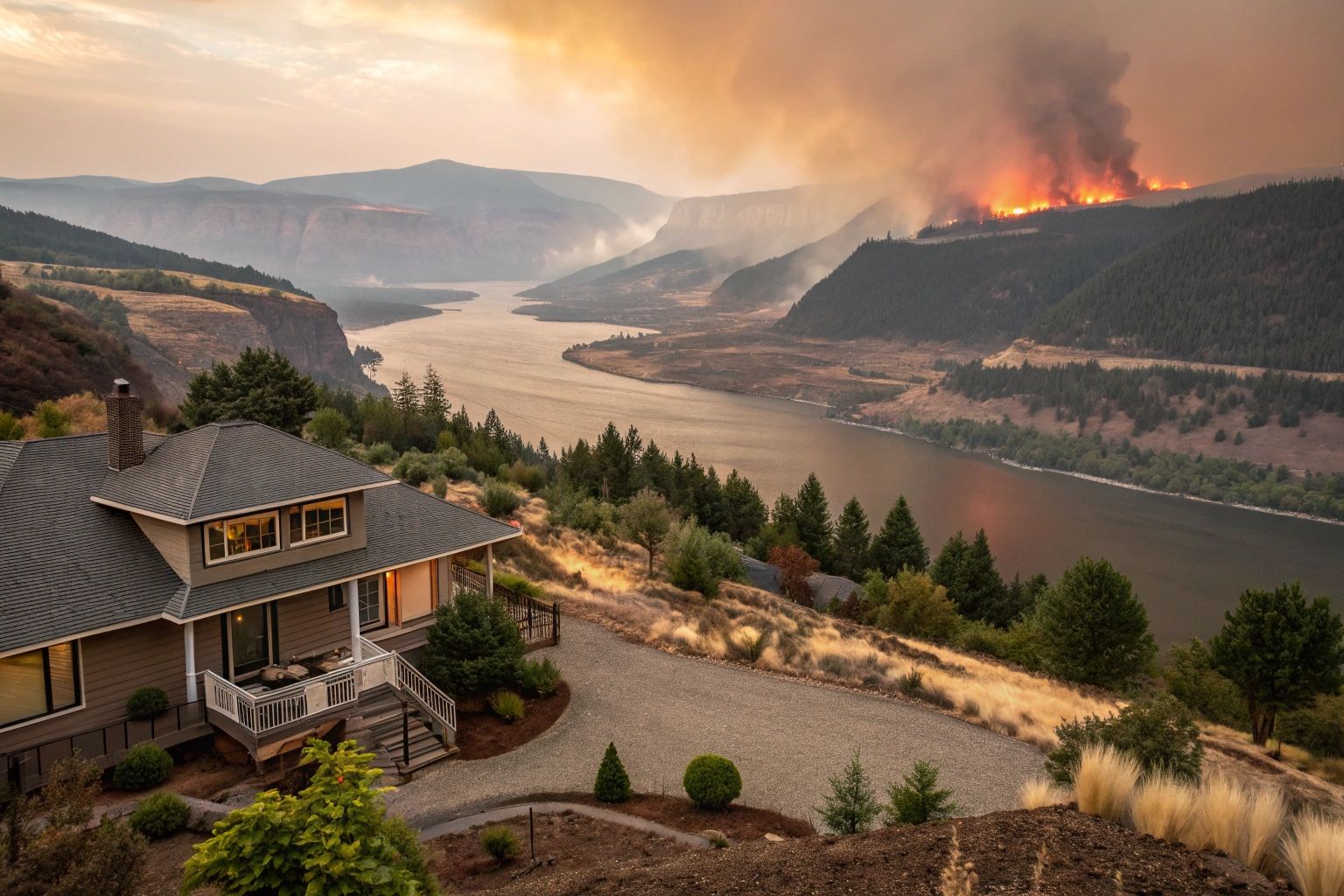
The Columbia River Gorge, with its breathtaking vistas and world-renowned outdoor recreation, stands as one of Oregon’s most treasured natural landscapes. At the heart of this scenic wonder sits Hood River, a community that has found itself increasingly on the frontlines of devastating wildfires. As climate patterns shift and development expands into forested areas, Hood River faces a growing wildfire threat that has reshaped both the physical landscape and community preparedness strategies.
As restoration professionals serving communities throughout Oregon, we’ve witnessed firsthand how wildfires can transform lives in seconds and how proper preparation and response make critical differences in recovery outcomes. Whether you own property in Hood River, visit regularly, or simply want to understand the wildfire challenges facing the Columbia Gorge, this exploration offers valuable insights into fire prevention, property protection, and the restoration process after fire damage occurs.
Hood River’s Unique Wildfire Vulnerability
Before examining specific wildfire events, it’s important to understand what makes Hood River particularly susceptible to fire danger:
The Wind Tunnel Effect
The Columbia River Gorge functions as a natural wind tunnel, creating fire conditions unlike almost anywhere else in Oregon:
- Pressure Gradient Dynamics: Temperature differences between the east and west sides of the Cascades create powerful pressure gradients
- Funneled Airflow: The narrow gorge concentrates and accelerates wind patterns
- Seasonal Wind Patterns: East winds in late summer and fall can exceed 60 mph
- Rapid Fire Spread: These winds can drive flames at extraordinary speeds, sometimes jumping the Columbia River
- Unpredictable Behavior: Wind patterns can shift suddenly, changing fire direction with little warning
Local Impact: During the 2017 Eagle Creek Fire, these wind conditions pushed flames nearly 13 miles in just 16 hours—a rate of spread that left even experienced firefighters astonished.
Vegetation and Terrain Factors
Hood River’s landscape creates additional wildfire complexities:
- Diverse Fuel Types: The transition zone between wet western forests and dry eastern woodlands creates variable fuel conditions
- Steep Slopes: The gorge’s dramatic topography accelerates fire spread up slopes
- Limited Access: Many areas have few access roads for firefighting equipment
- Intermixed Land Use: Agricultural lands, forests, and residential areas create complex firefighting priorities
- Drought Vulnerability: The area has experienced increasing drought frequency in recent decades
Restoration Perspective: These varied fuel and terrain types create complex burn patterns, where one property might be destroyed while another nearby is spared, making community-wide restoration efforts particularly challenging.
The Wildland-Urban Interface Challenge
Hood River County exemplifies what fire scientists call the “wildland-urban interface” (WUI)—areas where homes and development meet or intermingle with undeveloped wildland vegetation:
- Residential development has expanded into previously forested areas
- Many properties feature trees and vegetation close to structures
- Road networks may be limited, creating evacuation challenges
- Water supply for firefighting can be inconsistent
- Building construction may not incorporate fire-resistant features
Historical Context: While wildfire has always been part of the Columbia Gorge ecosystem, the expansion of development into high-risk areas has dramatically increased potential property damage and human impact.
Historic Wildfires: Hood River’s Trial by Fire
Examining past wildfires provides valuable insights into the community’s vulnerabilities and resilience:
The 2017 Eagle Creek Fire
This human-caused fire became one of Oregon’s most notorious wildfires:
- Burned approximately 50,000 acres across the Columbia River Gorge
- Forced evacuation of thousands of residents
- Closed Interstate 84 for two weeks
- Severely damaged iconic hiking trails and natural areas
- Created hazardous air quality throughout the region
Hood River Impact: While the fire primarily burned on the Oregon side of the Gorge west of Hood River, the community became a hub for evacuees, firefighting operations, and suffered significant economic disruption and air quality impacts.
Property Damage Insight: Properties with maintained defensible space and fire-resistant materials generally fared significantly better than those without these preparations, even in areas with intense fire activity.
The 2020 Labor Day Fires
While the Riverside and Beachie Creek fires burned primarily outside Hood River County, their impacts were deeply felt:
- Created hazardous air quality that lasted for weeks
- Brought evacuation warnings to parts of Hood River County
- Strained regional firefighting resources
- Damaged agricultural operations through smoke exposure
- Created economic impacts through tourism disruption
Restoration Challenge: These fires highlighted how even properties not directly impacted by flames often suffered significant smoke damage requiring professional restoration, particularly ventilation systems and interior surfaces.
The 2022 Mosier Creek Fire
This fire burned over 985 acres and threatened numerous structures:
- Destroyed several homes and outbuildings
- Required Level 3 (“Go Now”) evacuations
- Damaged agricultural operations
- Required a coordinated multi-agency response
- Demonstrated the increasing fire risk in the Gorge
Local Example: Properties where owners had implemented home-hardening techniques—such as ember-resistant vents and fire-resistant roofing—generally survived with minimal damage even when surrounding vegetation burned.
Community Response: Hood River’s Adaptive Approach
Rather than accepting wildfire as an inevitable disaster, Hood River has implemented several innovative approaches to reduce risk and improve resilience:
The Hood River County Community Wildfire Protection Plan
Updated in 2018, this comprehensive plan addresses wildfire risk through multiple strategies:
- Identifying high-risk areas throughout the county
- Prioritizing fuel reduction projects
- Coordinating evacuation planning
- Promoting Firewise community principles
- Establishing equipment and training needs
Implementation Example: Following this plan, the community completed strategic fuel breaks around critical infrastructure and high-risk neighborhoods, creating defensible zones that have already proven effective during smaller fire events.
Multi-Agency Coordination Improvements
Learning from past fires, Hood River has enhanced coordination between:
- Oregon Department of Forestry
- U.S. Forest Service
- Local fire departments
- Emergency management agencies
- Community volunteer organizations
Practical Application: This improved coordination was evident during recent fire responses, with faster evacuation notifications and better resource positioning based on fire behavior predictions.
Community Education and Engagement
Hood River has developed a robust community involvement approach:
- Regular Firewise workshops for property owners
- School-based wildfire education programs
- Community fuels reduction events
- Evacuation drills and planning sessions
- Volunteer firefighter recruitment and training
Restoration Perspective: Communities that invest in education typically experience better outcomes during recovery, as residents understand how to work effectively with insurance companies and restoration professionals.
Property-Level Fire Resilience: Lessons from Hood River
Hood River property owners have implemented various approaches to improve wildfire resilience, offering valuable lessons for others:
Creating Effective Defensible Space
Pro Tip: While the standard recommendation is for 30 feet of defensible space, properties in high-wind areas like Hood River benefit from expanded 100-foot buffers when possible, particularly on the sides facing prevailing wind directions.
Effective defensible space implementation includes:
- Zone 1 (0-5 feet): Keeping this area nearly free of all flammable materials
- Zone 2 (5-30 feet): Maintaining widely spaced vegetation and removing ladder fuels
- Zone 3 (30-100+ feet): Thinning vegetation and creating fuel breaks
- Strategic placement of hardscaping features like stone walls and patios
- Regular maintenance, especially before fire season
Cost Perspective: While creating defensible space requires initial investment and ongoing maintenance, it typically costs between $1,000-$5,000 for an average property—far less than the deductible on most insurance policies.
Home Hardening Techniques
Hood River property owners have learned that specific building materials and design elements dramatically improve fire resilience:
- Roofing Materials: Class A fire-rated roofing (metal, tile, or composition)
- Vent Protection: Installing 1/8-inch metal mesh over all vents to block embers
- Window Upgrades: Multi-pane tempered glass that resists breaking from heat
- Siding Choices: Fiber cement, stucco, or metal instead of wood siding
- Deck Construction: Using fire-resistant decking materials and enclosing undersides
Restoration Insight: In our post-fire assessments, homes with these features typically experience 60-80% less fire damage compared to homes without them, even in areas with significant fire activity.
Ember-Resistant Landscaping
Since wind-driven embers cause many structure ignitions, Hood River residents have adapted their landscaping:
- Replacing bark mulch near structures with stone or gravel
- Selecting low-growing, high-moisture plants near buildings
- Removing highly flammable plants like juniper and cedar
- Installing hardscaping features that can act as fire breaks
- Implementing proper irrigation to maintain plant moisture content
Safety Warning: During high fire danger periods, even well-maintained landscaping can become fuel. Always follow evacuation orders promptly regardless of your property preparations.
Emergency Preparedness Steps
Beyond physical property improvements, Hood River residents have enhanced their emergency readiness:
- Creating detailed family evacuation plans with multiple routes
- Preparing go-bags with essential documents and supplies
- Installing emergency backup power systems
- Documenting property contents through video and photos
- Establishing neighborhood communication networks
Restoration Perspective: Properties with thorough pre-event documentation typically experience faster, more comprehensive insurance settlements following fire damage.
Portland Area Context: The Wildfire Connection
While Portland isn’t facing the same immediate wildfire risks as Hood River, the connection is stronger than many realize:
- Air Quality Impact: Portland experienced hazardous air quality for days during recent gorge fires
- Watershed Concerns: Many Portland-area water sources originate in areas vulnerable to wildfire
- Regional Resources: Portland firefighting resources are often deployed to assist with gorge fires
- Evacuation Support: Portland serves as a major evacuation destination during gorge fires
- Economic Links: Tourism and agricultural disruptions affect Portland’s economy
Local Insight: Portland-area property owners increasingly face insurance premium increases and coverage challenges related to regional wildfire risks, making fire-resilient building practices relevant even in urban areas.
Professional Restoration: The Post-Fire Recovery Process
Understanding what happens after a wildfire is crucial for property owners:
The Assessment Phase (First 24-48 Hours)
Professional restoration begins with a comprehensive evaluation:
- Structural safety assessment to ensure building stability
- Documentation of all visible damage for insurance purposes
- Evaluation of smoke infiltration throughout the structure
- Identification of water damage from firefighting efforts
- Security measures to protect the property from further damage
Restoration Challenge: After wildfires, damaged properties are often exposed to the elements. Professional board-up and temporary roofing services are critical to prevent secondary damage from weather.
The Mitigation Phase (Days 2-7)
This phase focuses on preventing additional damage:
- Water extraction from firefighting efforts
- Smoke odor containment to prevent cross-contamination
- HVAC system cleaning and sealing
- Removal of unsalvageable materials
- Application of specialized sealants to lock in smoke odors in salvageable structural elements
Critical Timing: Properties that receive professional smoke mitigation within the first week have significantly better outcomes in terms of persistent odor elimination and corrosion prevention.
The Restoration Phase (Weeks to Months)
The final phase returns properties to pre-fire condition:
- Structural repairs and reconstruction
- Thorough cleaning of all surfaces using specialized techniques
- Content cleaning and restoration
- Deodorization treatments
- HVAC system restoration and filter replacement
Restoration Perspective: While DIY cleanup might appear to work initially, smoke particles contain acids that continue to cause damage over time if not properly remediated. Professional restoration addresses these hidden contaminants that can cause ongoing corrosion and odor.
The Pacific Water & Fire Restoration Difference
Our team brings specialized expertise to wildfire damage scenarios in Hood River and throughout Oregon:
- Fire Damage Certification: Our technicians hold IICRC certifications in fire and smoke restoration
- Content Restoration Specialists: We employ experts in restoring smoke-damaged belongings
- Odor Control Technology: We utilize advanced hydroxyl and ozone technologies for thorough deodorization
- Structural Cleaning Expertise: Our teams are trained in specialized techniques for removing smoke residue from different building materials
- Insurance Coordination: We work directly with your insurance company to ensure comprehensive coverage
Restoration Philosophy: We believe in restoration rather than replacement whenever possible, preserving cherished items and reducing waste while delivering superior results.
Preparing Your Property: Practical Next Steps
Inspired by Hood River’s experience, here are practical steps property owners throughout Oregon can take:
Immediate Actions (Next 30 Days)
- Conduct a DIY Vulnerability Assessment: Walk your property looking for obvious risks like vegetation touching structures, wooden fences connected to your home, and debris accumulation
- Create a Documentation Package: Take detailed photos/videos of your property and store copies in multiple locations including the cloud
- Review Insurance Coverage: Specifically check for wildfire coverage, exclusions, and policy limits
- Establish an Evacuation Plan: Identify multiple routes and reunification locations for household members
- Assemble Emergency Supplies: Prepare a go-bag with essential documents and supplies
Medium-Term Projects (1-6 Months)
- Implement Basic Defensible Space: Address the most critical vegetation management needs within 30 feet of structures
- Upgrade Vulnerable Features: Replace wood mulch with non-flammable alternatives near buildings
- Address Vent Vulnerabilities: Install metal mesh over vents to prevent ember entry
- Clean Gutters and Roofs: Remove all flammable debris from these fire-vulnerable areas
- Develop a Neighborhood Communication Plan: Coordinate with neighbors for mutual assistance during emergencies
Long-Term Preparations (6-24 Months)
- Implement Home Hardening Upgrades: Consider more substantial improvements like fire-resistant roofing and siding
- Expand Defensible Space: Extend vegetation management to 100+ feet where possible
- Install Emergency Water Supply: Consider water storage options for firefighting purposes
- Explore Alternative Power Options: Evaluate backup power systems that can operate during emergencies
- Join or Form a Firewise Community: Work with neighbors on community-wide resilience projects
Looking Forward: Living With Wildfire Risk
Hood River’s approach demonstrates that communities can live with wildfire risk through preparation, adaptation, and community cooperation:
The Changing Fire Environment
Climate projections indicate that Hood River and the Columbia Gorge will likely experience:
- Longer fire seasons extending further into fall
- More frequent periods of extreme fire danger
- Increased drought conditions affecting vegetation moisture
- Continued pressure from development in wildland-urban interface areas
- Greater need for coordinated regional resources
The Community Resilience Factor
Research from previous wildfires shows that communities with strong social connections experience:
- More effective evacuations with fewer people left behind
- Faster recovery through mutual assistance
- Better mental health outcomes following disasters
- More efficient resource sharing during extended emergencies
- Greater long-term recovery satisfaction
When Fire Strikes: We’re Here to Help
Whether you’re interested in proactive measures to protect your property or need assistance after fire damage has occurred, our team brings specialized expertise to wildfire scenarios. Our goal is not just to restore properties after damage occurs, but to help build more resilient communities that can better withstand whatever challenges nature brings.
Emergency Fire Damage Restoration? Call Now: 503-201-7337
For immediate assistance with fire or smoke damage, our emergency response team is available 24/7.
For a free wildfire resilience assessment or more information about our fire damage restoration services, contact Pacific Water & Fire Restoration today.
Pacific Water & Fire Restoration is a trusted leader in the restoration industry, serving Portland, Hood River, and surrounding communities with professional water, fire, mold, and storm damage restoration services. Our IICRC-certified professionals are available 24/7 to respond to your emergency restoration needs.