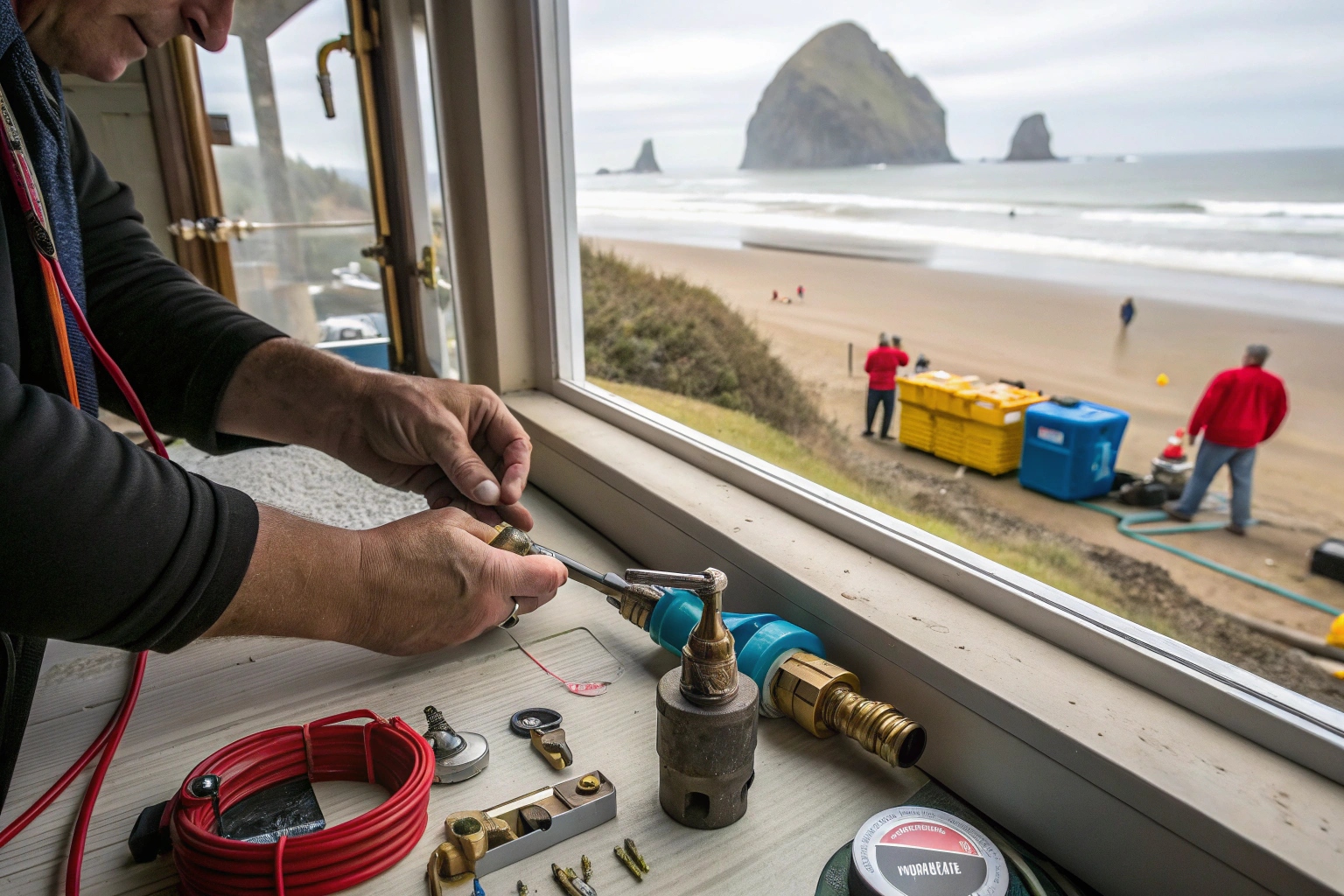
Nestled along Oregon’s stunning coastline, Cannon Beach is renowned for its iconic Haystack Rock, art galleries, and pristine sandy shores. Yet beneath this picturesque paradise lies a sobering reality: the community sits directly in the impact zone of what scientists call the most significant natural threat to the Pacific Northwest—a major Cascadia Subduction Zone earthquake and tsunami. Rather than ignoring this threat, Cannon Beach has emerged as a leader in community preparedness, developing innovative approaches that balance coastal charm with practical resilience.
As restoration professionals serving communities throughout Oregon, we’ve witnessed how preparation dramatically impacts recovery outcomes. Whether you own property in Cannon Beach, visit regularly, or simply want to learn from their forward-thinking approach, understanding how this community is tackling the Cascadia threat offers valuable lessons in disaster preparedness and property protection.
Understanding the Cascadia Threat: Science and Probability
Before exploring Cannon Beach’s preparedness efforts, it’s important to understand exactly what the community is preparing for:
The Cascadia Subduction Zone Explained
The Cascadia Subduction Zone is a 700-mile-long fault line that runs from northern California to southern British Columbia, where the Juan de Fuca tectonic plate is being forced beneath the North American plate. When these plates eventually slip, they will trigger:
- A massive earthquake estimated between magnitude 8.0-9.0+
- Intense shaking lasting 3-5 minutes (compared to seconds in typical earthquakes)
- Tsunami waves reaching coastal communities within 15-30 minutes
- Widespread infrastructure damage throughout the Pacific Northwest
- Multiple aftershocks, some potentially above magnitude 7.0
Local Impact: For Cannon Beach specifically, models predict tsunami waves potentially reaching 80-100 feet in height, with the first wave arriving approximately 15-20 minutes after the earthquake.
Probability Factors
Scientists have determined that major Cascadia earthquakes occur on average every 243 years, with the last one striking in January 1700—putting us now at 324 years since the last event. Current probability estimates include:
- 37% chance of a magnitude 8.0+ earthquake in the next 50 years
- Greater likelihood of a southern Cascadia section rupture, which would directly impact Oregon
- Approximately 10-14% chance of the “full-rip” magnitude 9.0 scenario within 50 years
Restoration Perspective: This isn’t simply theoretical science—the geological record shows that these events have occurred regularly for thousands of years. The question isn’t if it will happen, but when.
Cannon Beach’s Unique Vulnerability Profile
Several factors make Cannon Beach particularly vulnerable to Cascadia impacts:
Geographic Challenges
- Low-Lying Coastal Location: Much of Cannon Beach sits just a few feet above sea level
- Limited Evacuation Routes: Highway 101 and connecting roads are vulnerable to landslides
- Isolation Risk: The community could be cut off from outside assistance for weeks
- Ecola Creek Amplification: The creek mouth may channel and intensify tsunami waves
Infrastructure Concerns
- Aging Building Stock: Many structures predate modern seismic codes
- Water and Sewer Vulnerability: Critical systems could be damaged or destroyed
- Bridge Dependencies: Key access routes depend on bridges likely to fail in an earthquake
- Tourism Factor: Population can swell from 1,700 residents to 10,000+ visitors during peak season
Historical Context: Following the 2011 Tohoku earthquake and tsunami in Japan, Cannon Beach officials observed striking similarities between affected Japanese coastal towns and their own community, accelerating their preparedness efforts.
Cannon Beach’s Innovative Preparedness Initiatives
Rather than being paralyzed by the threat, Cannon Beach has implemented several pioneering approaches to earthquake and tsunami preparedness:
The Resilient Community Objective
In 2019, Cannon Beach adopted a formal “Resilient Community Objective” that guides development decisions with the Cascadia threat in mind. Key elements include:
- Requiring new public buildings to meet enhanced seismic standards
- Incorporating tsunami evacuation considerations into urban planning
- Developing a 30-day community self-sufficiency standard
- Creating distributed infrastructure systems with redundant capabilities
- Establishing post-disaster building standards and expedited permitting
Implementation Example: When designing its new elementary school, Cannon Beach located it outside the tsunami zone and engineered it to serve as an emergency shelter for up to 1,000 people.
Vertical Evacuation Structures
Recognizing that many people won’t be able to reach high ground in time, Cannon Beach has pioneered vertical evacuation planning in Oregon:
- The proposed design for a new city hall includes a tsunami evacuation roof
- Private developments over three stories are incentivized to incorporate tsunami evacuation platforms
- Building code amendments now facilitate construction of these life-saving structures
- Public education ensures visitors and residents know how to access these structures
Engineering Challenge: These structures must withstand both intense ground shaking and subsequent tsunami forces—a demanding engineering requirement that adds approximately 30% to construction costs.
Community Cache System
Cannon Beach has developed an innovative “community cache” system to support post-disaster survival:
- Distributed supply caches placed strategically throughout high ground areas
- Waterproof containers with emergency supplies, medical equipment, and communication tools
- Solar and hand-crank powered equipment that doesn’t rely on the grid
- Regular community maintenance events that double as training opportunities
- Decentralized approach that doesn’t rely on a single vulnerable stockpile
Practical Application: These caches are designed not just for immediate survival but to support a functioning community during the weeks it may take for outside assistance to arrive.
The CERT Program Evolution
Cannon Beach has expanded the traditional Community Emergency Response Team (CERT) concept into a comprehensive neighborhood support system:
- 90% of neighborhoods now have trained CERT members
- Quarterly drills practice specific Cascadia scenarios
- Specialized training focuses on coastal-specific challenges
- Integration with local businesses and the tourism industry
- Mutual aid agreements with inland communities
Local Innovation: Cannon Beach CERT members have developed a “Tsunami Buddy” system where trained residents take responsibility for checking on specific neighbors, visitors, and vacation rentals during an evacuation.
Property-Level Preparedness: Lessons from Cannon Beach
Beyond community initiatives, Cannon Beach property owners have implemented various measures to protect individual buildings. These approaches offer valuable lessons for property owners throughout Oregon:
Structural Retrofitting Approaches
Pro Tip: While full seismic upgrades can be expensive, targeted retrofitting focused on critical connection points often provides significant improvement at a reasonable cost.
Effective retrofit elements include:
- Foundation bolting and bracing
- Cripple wall strengthening
- Moment frame additions
- Chimney reinforcement or replacement
- Flexible utility connections
Cost Perspective: Basic seismic retrofitting for a typical coastal home averages $3,000-$7,000, while comprehensive upgrades might range from $15,000-$50,000 depending on the structure.
Tsunami-Resistant Design Elements
For properties within tsunami zones, several design elements can significantly improve survivability:
- Breakaway ground floors that allow water to flow through
- Elevated living spaces above predicted water levels
- Reinforced concrete cores for structural integrity
- Impact-resistant windows and exterior materials
- Strategic landscaping to redirect water flows
Restoration Insight: We’ve observed that buildings with these design elements often remain structurally sound even when lower portions are damaged by water, making restoration significantly more feasible.
Emergency Systems Integration
Forward-thinking property owners are integrating various emergency systems:
- Automatic gas shut-off valves triggered by seismic activity
- Solar + battery backup systems independent of the grid
- Seismically secured water storage (minimum 1 gallon per person per day)
- Multiple evacuation route options clearly marked
- Distributed emergency supply storage
Safety Warning: Unsecured water heaters are one of the most common hazards in earthquakes. Properly securing this essential item costs less than $50 but can prevent gas leaks, fires, and water damage.
Insurance Considerations
Cannon Beach property owners have learned important lessons about insurance protection:
- Standard homeowner policies typically exclude earthquake damage
- Separate earthquake insurance is available but often has high deductibles
- Few policies cover tsunami damage adequately
- Business interruption coverage is essential for commercial properties
- Inventory documentation should be stored in multiple locations
Important Note: Following a Cascadia event, insurance adjusters may be overwhelmed and delayed. Properties with thorough pre-event documentation and clear evidence of preventative measures typically receive faster claim processing.
Portland Area Context: The Cascadia Connection
While Portland won’t face tsunami risks, the city will experience significant earthquake impacts from a Cascadia event:
- Ground Shaking: Portland will likely experience strong to severe shaking for 3-5 minutes
- Liquefaction: Areas built on fill or with high water tables face soil liquefaction
- Infrastructure Disruption: Water, power, and transportation systems will face extensive damage
- Building Vulnerability: Older structures, especially unreinforced masonry, are at high risk
- Economic Impact: Portland’s economy is deeply connected to coastal communities
Local Insight: Portland’s western neighborhoods will likely experience stronger shaking than eastern areas due to their proximity to the Cascadia fault and underlying geology.
Professional Preparation: The Emergency Response Plan
For property owners, understanding what happens after a disaster is crucial for planning:
The Immediate Response Phase (0-72 hours)
During this period, professional restoration services will be focused on:
- Emergency stabilization of damaged structures
- Water extraction from tsunami-impacted buildings
- Temporary protection of exposed building elements
- Documentation of damage for insurance purposes
- Triaging buildings based on restoration potential
Restoration Challenge: Salt water from tsunamis creates more complex restoration needs than freshwater flooding, as salt accelerates corrosion and creates persistent hygroscopic conditions that attract additional moisture.
The Recovery Phase (Days 3-30)
This phase focuses on preventing secondary damage:
- Comprehensive moisture mapping and monitoring
- Strategic demolition of unsalvageable materials
- Industrial-grade drying operations
- Sanitization to prevent mold and bacterial growth
- Corrosion control measures for affected metal components
Critical Timing: Properties that receive professional drying within the first week have significantly better outcomes than those that wait longer, particularly regarding mold prevention and structural preservation.
The Restoration Phase (Weeks to Months)
The final phase returns properties to functional condition:
- Structural repairs guided by engineering assessments
- Rebuilding with more resilient materials and methods
- Code-compliant upgrades to affected systems
- Implementation of preventative measures for future events
- Final documentation and completion of insurance claims
Restoration Perspective: After disasters, property owners who work with certified restoration professionals typically receive more comprehensive insurance settlements and experience fewer long-term building issues.
The Pacific Water & Fire Restoration Approach
While we hope a Cascadia event remains distant, our team maintains specialized training for this scenario:
- Earthquake Response Certification: Our technicians hold specialized certifications in post-earthquake building assessment and water damage restoration
- Equipment Readiness: We maintain generators, satellite communications, and mobile equipment necessary for off-grid operation
- Disaster Networking: We participate in regional mutual aid networks that can bring resources from unaffected areas
- Continuous Training: Regular simulation exercises keep our team prepared for complex disaster scenarios
- Documentation Systems: Our digital documentation systems are designed to operate offline and synchronize when connections are restored
Preparation Philosophy: We believe in helping clients prepare proactively rather than simply responding after damage occurs.
Preparing Your Property: Practical Next Steps
Inspired by Cannon Beach’s example, here are practical steps property owners throughout Oregon can take:
Immediate Actions (Next 30 Days)
- Conduct a DIY Seismic Assessment: Identify obvious vulnerabilities like unsecured water heaters, heavy overhead items, and unbraced cripple walls
- Create a Property Documentation Package: Take detailed photos/videos of your property and store copies in multiple locations including the cloud
- Review Insurance Coverage: Specifically check for earthquake coverage, exclusions, and deductibles
- Establish an Evacuation Plan: Identify multiple routes and reunification locations for household members
- Assemble Emergency Supplies: Prepare for a minimum of 2 weeks of self-sufficiency
Medium-Term Projects (1-6 Months)
- Consult with a Structural Engineer: Get professional evaluation of your property’s seismic resilience
- Implement Basic Retrofits: Address the most critical vulnerabilities identified in the assessment
- Install Automatic Shut-off Valves: Protect against gas and water damage after earthquakes
- Secure Large Furniture and Appliances: Prevent tipping and falling hazards
- Develop a Business Continuity Plan: For commercial properties, establish how operations would continue
Long-Term Preparations (6-24 Months)
- Implement Comprehensive Retrofits: Consider more extensive structural improvements
- Establish Backup Systems: Consider alternative power, water, and heating options
- Create a Detailed Post-Disaster Plan: Include restoration priorities and contact information
- Join Community Preparedness Efforts: Get involved with local CERT or neighborhood planning
- Schedule Regular Review and Updates: Set calendar reminders to refresh supplies and plans annually
Looking Forward: Building Resilience Beyond Buildings
Cannon Beach’s approach demonstrates that true resilience extends beyond structural improvements to include community connections and psychological preparedness:
The Community Connection Factor
Research from previous disasters shows that communities with strong social connections experience:
- More effective evacuations with fewer people left behind
- Faster recovery through mutual assistance
- Better mental health outcomes following disasters
- More efficient resource sharing during extended isolation
- Greater long-term recovery satisfaction
Mental Preparedness Benefits
Perhaps counterintuitively, communities that openly address disaster threats experience:
- Reduced anxiety about potential disasters
- Greater confidence in ability to respond effectively
- Increased likelihood of taking preparedness actions
- More optimistic outlook about recovery potential
- Stronger community cohesion even before disasters strike
When the Earth Shakes: We’re Here to Help
Whether you’re interested in proactive measures to protect your property or need assistance after damage has occurred, our team brings specialized expertise to earthquake and water damage scenarios. Our goal is not just to restore properties after damage occurs, but to help build more resilient communities that can better withstand whatever challenges nature brings.
Emergency Restoration? Call Now: 503-201-7337
For immediate assistance with earthquake or water damage, our emergency response team is available 24/7.
For a free earthquake resilience assessment or more information about our restoration services, contact Pacific Water & Fire Restoration today.
Pacific Water & Fire Restoration is a trusted leader in the restoration industry, serving Portland and surrounding communities with professional water, fire, mold, and storm damage restoration services. Our IICRC-certified professionals are available 24/7 to respond to your emergency restoration needs.