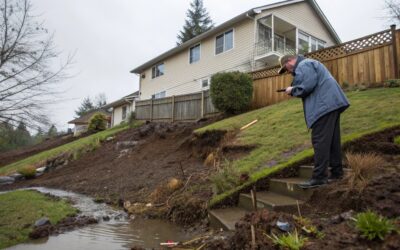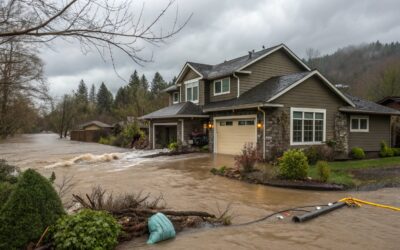
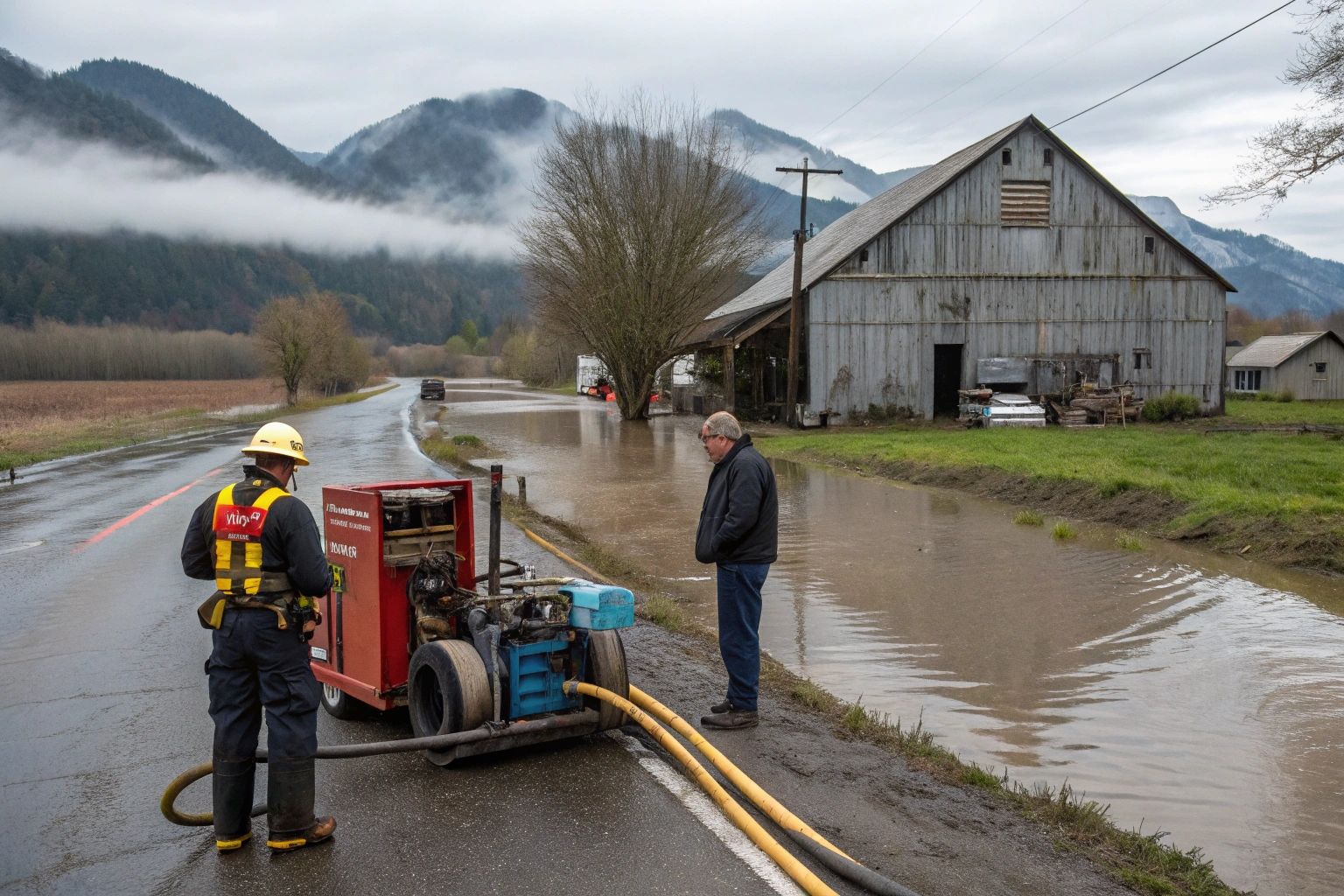

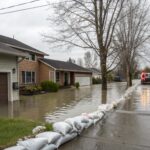
In the shadow of Oregon’s beautiful Coast Range, Tillamook County has flourished as a hub of agriculture and dairy production. Yet this same geography that creates such a fertile valley has also brought recurring devastation. For over a century, Tillamook residents have battled catastrophic flooding that has shaped both the landscape and the community’s resilient spirit. As restoration professionals serving the Pacific Northwest, we’ve witnessed firsthand how understanding local flood history can better prepare property owners for future challenges.
Tillamook’s Perfect Storm: Why Floods Happen
Tillamook’s vulnerability to flooding stems from a combination of natural factors that create what hydrologists call “the perfect storm”:
- Geographic Basin Formation: Tillamook sits in a basin where five rivers converge before emptying into Tillamook Bay
- Coastal Influence: High tides and storm surges can prevent river water from efficiently draining into the ocean
- Heavy Rainfall Region: The Coast Range receives some of Oregon’s highest precipitation levels, with average annual rainfall exceeding 90 inches
- Steep Mountain Slopes: Rapid water runoff from the Coast Range accelerates flooding
- Logging Impact: Historical clear-cutting reduced the landscape’s natural ability to absorb rainfall
This combination creates a recurring cycle of flooding that has repeatedly tested the community’s resilience.
Tillamook’s Major Historic Floods: A Timeline of Resilience
The 1933 Flood: Setting the Benchmark
The 1933 flood remains one of the most significant in Tillamook’s history. After days of torrential rain, all five rivers in the Tillamook Valley overflowed simultaneously. Downtown Tillamook sat under several feet of water, with damages estimated at over $13 million in today’s dollars. This event prompted the first serious discussions about flood control infrastructure.
Key Impact: The 1933 flood demonstrated the vulnerability of Tillamook’s agricultural economy, with thousands of dairy cows lost and farmland severely damaged.
The Devastating 1950s: Back-to-Back Disasters
The 1950s brought repeated flooding to Tillamook, with major events in 1950, 1953, and 1955. The cumulative impact of these floods was particularly devastating, as communities barely had time to recover before the next disaster struck.
Key Impact: These repeated floods led to the formation of the Tillamook County Flood Control District and spurred federal involvement in flood mitigation projects.
The 1996 Flood: Modern Infrastructure Tested
February 1996 brought one of Oregon’s most widespread flooding events, with Tillamook among the hardest-hit areas. Despite decades of infrastructure improvements, downtown Tillamook and surrounding farms experienced severe flooding. Highway 101 was closed in multiple locations, effectively isolating the community.
Property Damage Insight: Many buildings that had survived previous floods suffered significant damage in 1996 because modern finishing materials (drywall, insulation, etc.) are often more vulnerable to water damage than the older, simpler building materials used in historic structures.
The 2006-2007 Double Impact
Tillamook faced back-to-back major flood events in November 2006 and December 2007. The proximity of these events created compounding challenges – many properties that were still under repair from the 2006 flood were damaged again in 2007.
Restoration Challenge: Our restoration colleagues noted that these sequential floods revealed how important proper restoration techniques are for flood resilience. Properties that received professional, complete restoration after the 2006 event generally fared better during the 2007 floods than those with partial or DIY repairs.
Recent Events: Ongoing Vigilance
While major flood control projects have reduced the impact of smaller flooding events, significant floods occurred in 2015 and 2019, demonstrating that Tillamook’s flood risk remains an ongoing challenge despite mitigation efforts.
The Community Response: Engineering Solutions
Tillamook’s response to its flooding history showcases both engineering innovation and community determination:
Project Exodus: Rethinking River Flow
One of the most ambitious flood control initiatives, Project Exodus, focused on creating a more direct path for the Wilson River to reach Tillamook Bay, reducing backup into downtown areas. This project represented a shift in thinking – working with natural water flow patterns rather than simply trying to contain rising waters.
Southern Flow Corridor Project
Completed in 2016, this $9.5 million project reconnected 443 acres of historic tidal wetlands and removed barriers to natural water flow. The project both reduced flooding and restored important salmon habitat, demonstrating how modern flood control can balance multiple environmental objectives.
Restoration Perspective: These natural flow solutions have shown better long-term effectiveness than traditional levee-only approaches, which often simply shift flooding problems to different areas.
Infrastructure Investments
Beyond these major projects, Tillamook has implemented numerous other flood control measures:
- Raised buildings in flood-prone areas
- Improved bridge designs to reduce debris dams
- Enhanced stormwater management systems
- Regular river dredging programs
- Early warning systems for flood events
Lessons Learned: What Property Owners Can Take Away
Tillamook’s flood history offers valuable lessons for property owners throughout the Pacific Northwest:
1. Understanding Your Specific Flood Risk Is Critical
Pro Tip: Even within the same community, flood risk can vary significantly based on microtopography, drainage patterns, and proximity to water sources. Research your property’s elevation and flood history specifically, not just your general area.
Many Tillamook property owners discovered that official flood maps didn’t always accurately predict which properties would flood. Being 100 feet outside a designated flood zone doesn’t guarantee protection.
2. Building Techniques Matter
Properties built with flood-resistant design principles have consistently survived Tillamook floods with less damage:
- Elevated first floors (at least 3 feet above base flood elevation)
- Flood vents that allow water to flow through crawlspaces rather than pushing against foundations
- Water-resistant materials on lower levels
- Electrical systems elevated above potential flood levels
- Backflow preventers on sewer lines
Restoration Insight: After responding to hundreds of flooding events across Oregon, we’ve observed that properties with these features typically experience 50-70% less damage during flood events.
3. Maintenance Plays a Key Role in Flood Resilience
Tillamook’s experience has shown that regular maintenance significantly impacts flood resilience:
- Keeping gutters and drainage systems clear
- Maintaining flood control equipment like sump pumps
- Regular inspection of foundation walls and waterproofing
- Clearing debris from nearby streams and drainage ditches
- Maintaining flood insurance and understanding coverage
Safety Warning: Never enter a flooded area without proper safety precautions. Just 6 inches of moving water can knock an adult off their feet, and floodwaters often contain contaminated materials and hidden hazards.
4. Community-Level Preparation Makes a Difference
Tillamook’s response improvements over decades of flooding demonstrate how community-level preparation enhances individual property protection:
- Knowing your evacuation routes
- Understanding community warning systems
- Participating in neighborhood emergency planning
- Supporting local flood control initiatives
- Sharing knowledge about historical flood patterns
Portland Area Context: Are You at Risk?
While Tillamook’s flooding is particularly well-documented, Portland area residents face similar risks from different water sources:
- The Willamette and Columbia Rivers: Historic floods have inundated parts of Portland, with the 1996 flood causing over $60 million in damage to Portland businesses
- Urban Stream Flooding: Johnson Creek, Fanno Creek, and other urban streams regularly flood during heavy rain events
- Stormwater System Overflows: Many Portland neighborhoods experience localized flooding when stormwater systems reach capacity
- Snowmelt Events: Rapid snowmelt combined with rain has triggered some of Portland’s most severe flooding
Local Insight: Johnson Creek has flooded over 20 times since 1941, with property damage extending well beyond the immediate creek banks. Similar to Tillamook’s experience, Portland area residents often discover that flooding doesn’t perfectly match official flood zone maps.
What To Do If You Experience Flooding
Despite the best prevention efforts, floods can still occur. Here’s what to do if your property is affected:
Immediate Response (0-24 hours)
- Safety First: Never enter a flooded building until you’ve confirmed it’s structurally sound and utilities are turned off
- Document Everything: Take extensive photos and videos before any cleanup begins
- Contact Your Insurance: Report the damage immediately, even if you’re unsure about coverage
- Remove Standing Water: The longer water remains, the more damage occurs
- Begin Moisture Mapping: Identify all affected areas, including hidden moisture behind walls and under floors
Critical Recovery Period (24-72 hours)
This window is crucial for preventing secondary damage like mold growth and structural weakening:
- Professional Assessment: Have experts evaluate hidden damage and develop a comprehensive restoration plan
- Industrial Drying: Deploy commercial-grade equipment to remove moisture from building materials
- Antimicrobial Application: Prevent mold growth in affected areas
- Content Evaluation: Assess which items can be restored and which must be replaced
- Moisture Monitoring: Track drying progress with specialized equipment
Restoration Fact: According to industry data, properties that receive professional water mitigation within the first 24 hours typically experience 15-40% less overall damage than those where mitigation begins after 48+ hours.
Long-Term Recovery Considerations
- Building Material Selection: Consider replacing damaged materials with more flood-resistant options
- Structural Modifications: Assess whether changes like raising electrical systems would improve future resilience
- Drainage Improvements: Address any site drainage issues that contributed to damage
- Insurance Review: Update coverage based on your actual experience
- Mitigation Planning: Develop specific plans for faster response to future events
The Pacific Water & Fire Restoration Difference
When flooding impacts your property, having a restoration partner with local knowledge can make a critical difference. Our team brings specific expertise to the Portland area’s unique flooding challenges:
- Regional Experience: Having responded to major water damage events throughout the Pacific Northwest, including Portland, Salem, and coastal communities
- IICRC Certification: Our technicians hold industry-leading certifications in water damage restoration and applied structural drying
- 24/7 Emergency Response: Immediate action when minutes count
- Advanced Equipment: Commercial-grade extraction, drying, and monitoring technology
- Comprehensive Approach: From emergency mitigation through complete restoration
- Insurance Coordination: We work directly with your insurance company to streamline the claims process
Preparing for the Future: Tillamook’s Ongoing Journey
Tillamook’s flood history continues to evolve. Current projects focus on both traditional flood control and innovative approaches like “room for river” concepts that create designated flooding areas to protect critical infrastructure.
For property owners throughout Oregon, Tillamook’s experience offers a valuable reminder: flooding is a recurring challenge that requires ongoing adaptation. By understanding historical patterns, implementing proven mitigation techniques, and preparing for rapid response, we can significantly reduce flood impacts.
When Waters Rise: We’re Here to Help
Whether you’re facing active flooding or looking to improve your property’s flood resilience, our team is ready to help with expert guidance and professional restoration services. Our goal is not just to restore properties after damage occurs, but to help build more resilient communities that can better weather whatever challenges nature brings.
Emergency Water Damage? Call Now: 503-201-7337
For immediate assistance with flooding or water damage, our emergency response team is available 24/7.
For a free flood resilience assessment of your property or more information about our water damage restoration services, contact Pacific Water & Fire Restoration today.
Pacific Water & Fire Restoration is a trusted leader in the restoration industry, serving Portland and surrounding communities with professional water, fire, mold, and storm damage restoration services. Our IICRC-certified professionals are available 24/7 to respond to your emergency restoration needs.