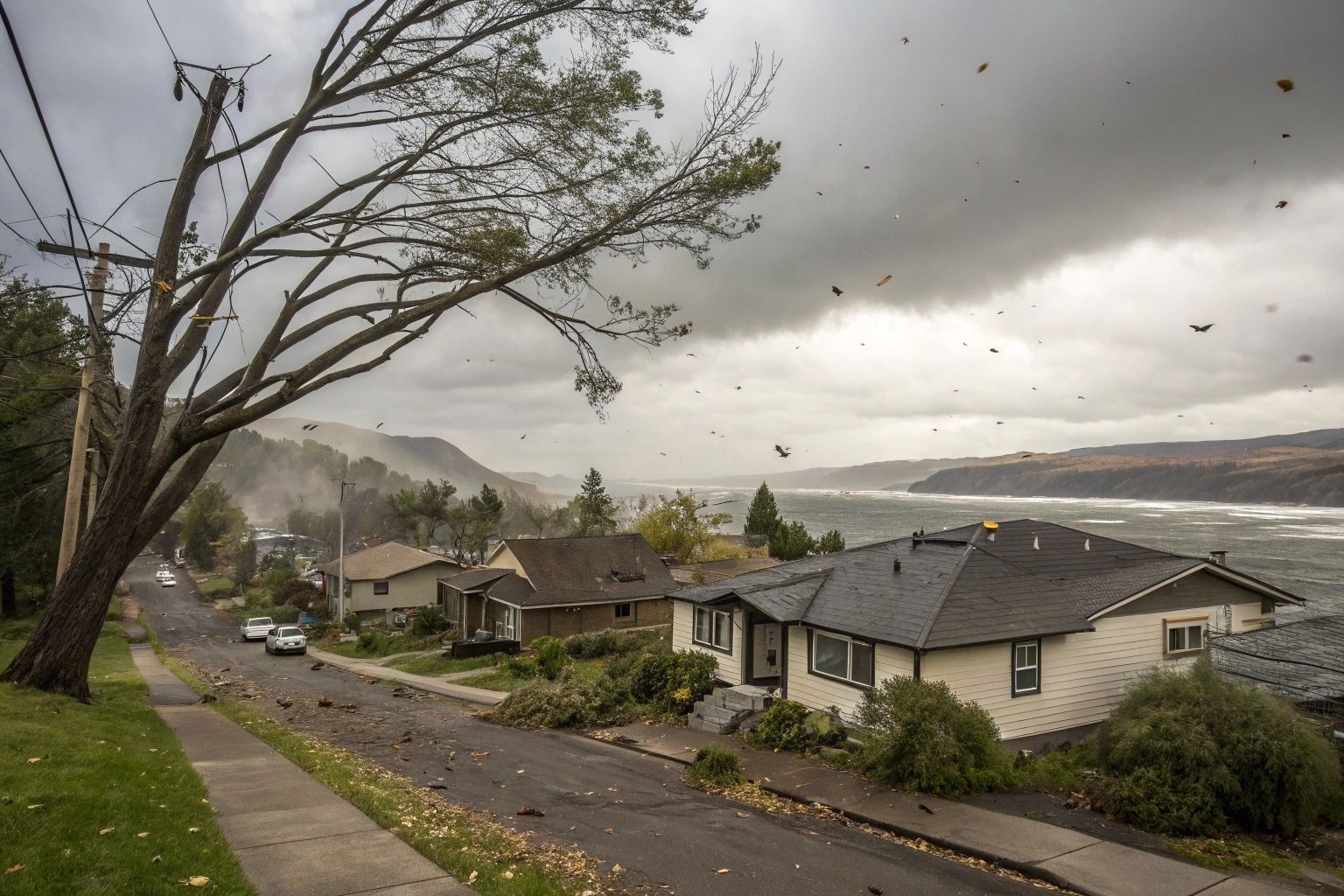


The Columbia River Gorge stands as one of Oregon’s most spectacular natural features, a breathtaking landscape carved through the Cascade Mountains. Yet for residents of The Dalles, situated at the eastern end of this scenic wonder, the gorge represents more than just majestic views—it’s a powerful wind tunnel that regularly generates some of the most destructive wind events in the Pacific Northwest. These winds have shaped not only the physical landscape but also the community’s architecture, infrastructure, and resilience strategies.
As restoration professionals serving communities throughout Oregon, we’ve witnessed firsthand how The Dalles’ unique wind patterns create distinctive property damage challenges that require specialized knowledge and techniques. Whether you own property in The Dalles, are considering investing there, or simply want to understand this fascinating community’s relationship with extreme wind, this exploration offers valuable insights into wind damage prevention, response, and recovery.
The Dalles’ Unique Wind Vulnerability
To understand The Dalles’ wind challenge, we must first appreciate the unique geographic and meteorological forces at work:
The Gorge Wind Machine
The Columbia River Gorge functions as a natural wind tunnel, creating conditions unlike almost anywhere else in Oregon:
- Pressure Gradient Dynamics: Temperature and pressure differences between the western and eastern sides of the Cascades create powerful pressure gradients
- Funneled Airflow: The narrow gorge concentrates and accelerates wind patterns
- Seasonal Intensity: While winds occur year-round, they’re particularly powerful during winter and late spring
- Directional Shifts: Wind patterns can change rapidly, often shifting direction and intensity within minutes
- Orographic Enhancement: Local topography around The Dalles further accelerates specific wind patterns
Local Impact: Wind monitoring stations near The Dalles have recorded sustained winds exceeding 60 mph, with gusts over 100 mph during extreme events—comparable to Category 2 hurricane-force winds.
The Dalles’ Topographical Wind Factors
The specific landscape around The Dalles creates additional wind complexities:
- Gateway Position: The Dalles sits at the transition zone between the gorge and the Columbia Plateau
- Channeling Effect: Hills surrounding the city funnel winds through specific neighborhoods
- Wind Shadow Areas: Some areas experience relative protection while others face intensified exposure
- Height Amplification: Properties on ridges and hilltops experience significantly stronger winds
- Terrain-Induced Turbulence: Complex terrain creates unpredictable turbulence patterns
Restoration Perspective: These varied wind patterns create uneven damage distributions, where one property might lose its roof while another nearby experiences minimal impact, making community-wide restoration efforts particularly challenging.
Building Stock Vulnerabilities
The Dalles’ diverse building inventory presents varying levels of wind vulnerability:
- Historic downtown buildings (some dating to the 1800s) with original roofing systems
- Mid-century homes with architectural features more vulnerable to wind damage
- Modern developments with varying levels of wind-resistant design
- Agricultural structures designed with different wind loading considerations
- Mixed commercial buildings ranging from historic to contemporary construction
Historical Context: While The Dalles has experienced significant winds throughout its history, building codes addressing wind loads have evolved substantially over time, leaving older structures particularly vulnerable.
Historic Wind Events: The Dalles’ Trial by Wind
Examining past wind events provides valuable insights into the community’s vulnerabilities and resilience:
The December 2014 Wind Storm
This event brought sustained winds of 50-60 mph with gusts exceeding 80 mph:
- Caused widespread power outages lasting days for some areas
- Damaged or destroyed numerous roofs throughout the city
- Toppled trees onto homes, vehicles, and power infrastructure
- Generated dangerous airborne debris that caused secondary damage
- Resulted in millions in property damage across the community
Property Impact Pattern: Properties with regular roof maintenance and wind-resistant features generally weathered the storm with minimal damage, while deferred maintenance properties suffered catastrophic failures.
Restoration Challenge: This event highlighted the critical need for rapid response, as properties with compromised roofs faced cascading damage from subsequent weather exposure.
The January 2021 Wind Event
More recently, a major winter wind event demonstrated evolving patterns:
- Brought 65+ mph wind gusts throughout The Dalles
- Caused significant property damage through both direct wind force and airborne debris
- Downed numerous trees and power lines
- Created dangerous wind-chill conditions during winter temperatures
- Required multi-day restoration efforts across the community
Local Example: Properties where owners had implemented strategic landscaping, removing vulnerable trees and maintaining proper pruning, experienced significantly less damage than those with unmaintained vegetation.
The April 2019 “Dust Devil” Event
While different from typical gorge winds, this unusual event demonstrated another wind risk:
- Created highly localized but intense wind vortices
- Damaged several roofs in specific neighborhoods
- Generated dangerous flying debris conditions
- Caused highly concentrated property damage
- Highlighted vulnerability to sudden, brief wind events
Restoration Insight: This event demonstrated how even brief wind incidents can cause significant damage, particularly to roofing systems with pre-existing vulnerabilities or improper installation.
Community Adaptations: How The Dalles Has Responded
Rather than simply accepting wind damage as inevitable, The Dalles has implemented several approaches to reduce risk and improve resilience:
Wind-Responsive Building Codes
The city has progressively updated building codes to address wind risks:
- Current requirements specify materials and techniques rated for 95+ mph winds
- More stringent roof attachment standards than many other Oregon communities
- Enhanced requirements for securing exterior features like siding and architectural elements
- Special provisions for projections like awnings and signs
- Rigorous inspection processes focusing on wind-vulnerable elements
Implementation Example: New developments in The Dalles now commonly feature architectural designs specifically engineered to minimize wind loading, with roof pitches and orientations designed to reduce lift forces during high winds.
Infrastructure Hardening Initiatives
The community has invested in making its infrastructure more wind-resistant:
- Underground conversion of previously vulnerable power lines
- Wind-resistant design standards for public facilities
- Enhanced tree management along rights-of-way
- Reinforced traffic signals and street lighting
- Wind-resistant modifications to public spaces
Practical Application: During recent wind events, areas with underground utilities maintained power while those with overhead systems experienced outages, demonstrating the effectiveness of these infrastructure investments.
Emergency Response Enhancements
The Dalles has developed specialized emergency protocols for wind events:
- Pre-staging of emergency resources before forecast wind events
- Rapid response teams for property protection after damage
- Enhanced debris management systems
- Public notification and warning systems specific to wind hazards
- Coordinated utility restoration priorities
Restoration Perspective: This improved emergency response has significantly reduced secondary damage through faster temporary protection of wind-damaged properties.
Property-Level Wind Resilience: Lessons from The Dalles
Property owners in The Dalles have implemented various approaches to improve wind resilience, offering valuable lessons for others:
Roof System Enhancements
Pro Tip: While standard roofing techniques may be adequate in other communities, properties in The Dalles benefit significantly from enhanced wind-resistant roofing systems that may add 15-20% to initial installation costs but often pay for themselves after a single major wind event.
Effective roof protection strategies include:
- Enhanced shingle attachment using six nails per shingle instead of the standard four
- Applying roofing cement under shingle tabs in high-wind areas
- Using ring-shank nails rather than smooth nails for stronger holding power
- Installing wind-rated ridge and soffit vents designed to resist pressure differences
- Implementing sealed roof decks with proper underlayment
Cost Perspective: While these enhancements add approximately $1,000-$3,000 to a typical roof replacement, they can prevent tens of thousands in damage during severe wind events.
Strategic Landscaping and Tree Management
The Dalles property owners have learned that proper landscaping dramatically impacts wind vulnerability:
- Tree Selection: Choosing wind-resistant native species for new plantings
- Regular Pruning: Maintaining trees to reduce sail effect and remove weak branches
- Phased Removal: Gradually replacing vulnerable trees with more wind-resistant varieties
- Strategic Placement: Positioning trees to create windbreaks without endangering structures
- Root System Management: Ensuring healthy root systems that provide adequate anchorage
Restoration Insight: In our post-wind event assessments, properties with well-maintained trees typically experience 40-60% less damage compared to those with unmaintained vegetation, even in the same neighborhood with similar wind exposure.
Exterior Feature Security
Since wind damage often begins with smaller exterior elements, proper securing has proven effective:
- Using enhanced attachment methods for gutters and downspouts
- Securing or removing items that could become windborne projectiles
- Reinforcing fences, especially those over 4 feet tall
- Using wind-rated garage doors with additional bracing
- Installing storm shutters or impact-resistant glass in very exposed locations
Safety Warning: During high wind events, even properly secured items can fail. Always follow evacuation or shelter-in-place guidance from local officials, regardless of your property preparations.
Wind-Resistant Building Techniques
For new construction and major renovations, The Dalles property owners have implemented specialized techniques:
- Continuous Load Path: Ensuring structural connections from roof to foundation
- Hurricane Straps/Clips: Using metal connectors at roof-wall junctions
- Enhanced Siding Attachment: Using additional fasteners for exterior cladding
- Reinforced Gable Ends: Bracing gable ends to prevent collapse
- Strategic Home Orientation: Positioning new structures to minimize wind exposure
Restoration Perspective: Homes built or renovated with these techniques typically experience 70-80% less structural damage during major wind events compared to conventional construction.
Portland Area Context: The Wind Connection
While Portland doesn’t typically experience the extreme winds seen in The Dalles, the connection is more significant than many realize:
- Wind Patterns: Strong east winds in the gorge often reach the Portland metro area, particularly eastern neighborhoods
- Infrastructure Links: Power transmission systems connecting Portland and The Dalles are vulnerable to gorge winds
- Transportation Impacts: Wind closures on I-84 affect commerce between regions
- Construction Practices: Wind-resistant techniques from The Dalles increasingly influence Portland builders
- Climate Change Considerations: Changing weather patterns may increase Portland’s wind vulnerability
Local Insight: Portland-area property owners can benefit from many of the same wind-resistant techniques used in The Dalles, particularly for east-facing properties or those in elevated locations.
Professional Restoration: The Post-Wind Damage Recovery Process
Understanding what happens after wind damage is crucial for property owners:
The Assessment Phase (First 24-48 Hours)
Professional restoration begins with a comprehensive evaluation:
- Structural safety assessment to identify immediate hazards
- Emergency protective measures to prevent further damage
- Documentation of all visible damage for insurance purposes
- Evaluation of water intrusion from damaged roofs or windows
- Development of a comprehensive restoration plan
Restoration Challenge: After wind events, damaged properties are often exposed to the elements. Professional emergency tarping and board-up services are critical to prevent secondary damage from rain or snow.
The Mitigation Phase (Days 2-7)
This phase focuses on preventing additional damage:
- Water extraction if rain has entered the structure
- Drying of affected materials to prevent mold growth
- Removal of damaged materials that cannot be salvaged
- Structural stabilization if needed
- Security measures to protect the property during repairs
Critical Timing: Properties that receive professional mitigation within the first 48 hours typically experience 30-50% less secondary damage than those where mitigation is delayed.
The Restoration Phase (Weeks to Months)
The final phase returns properties to pre-damage condition:
- Structural repairs to roofing, siding, and framing
- Replacement of damaged windows and doors
- Interior repairs to ceilings, walls, and floors
- Restoration of affected contents
- Final cleaning and deodorization
Restoration Perspective: Professional restoration often includes upgrades to prevent future wind damage, creating more resilient properties that can better withstand subsequent events.
The Pacific Water & Fire Restoration Difference
Our team brings specialized expertise to wind damage scenarios throughout Oregon:
- Storm Damage Certification: Our technicians hold IICRC certifications in water damage restoration and structural drying
- Emergency Response Capability: We maintain 24/7 readiness with pre-positioned emergency supplies
- Comprehensive Services: From emergency board-up through complete reconstruction
- Insurance Coordination: We work directly with your insurance company to ensure comprehensive coverage
- Wind-Resilient Rebuilding: We incorporate enhanced techniques to improve future wind resistance
Restoration Philosophy: We believe in not just restoring properties to pre-loss condition, but improving them to better withstand future wind events, creating long-term value for our clients.
Preparing Your Property: Practical Next Steps
Inspired by The Dalles’ experience, here are practical steps property owners throughout Oregon can take:
Immediate Actions (Next 30 Days)
- Conduct a DIY Wind Vulnerability Assessment: Examine your roof for loose shingles, check gutters and downspouts, and identify potential projectiles around your property
- Create a Documentation Package: Take detailed photos/videos of your property and store copies in multiple locations
- Review Insurance Coverage: Specifically check for wind damage coverage, exclusions, and policy limits
- Secure or Store Vulnerable Items: Before wind season, identify and secure items that could become dangerous projectiles
- Trim Obviously Hazardous Tree Limbs: Remove dead or weakened branches that overhang structures
Medium-Term Projects (1-6 Months)
- Roof Inspection and Maintenance: Have a qualified roofer check for vulnerable areas and make necessary repairs
- Professional Tree Assessment: Consult an arborist about potentially hazardous trees
- Upgrade Vulnerable Features: Consider replacing or reinforcing particularly wind-vulnerable elements
- Window and Door Evaluation: Assess the wind resistance of windows and doors, particularly large garage doors
- Develop a Family Communication Plan: Ensure everyone knows what to do during a wind emergency
Long-Term Preparations (6-24 Months)
- Strategic Re-Roofing: When replacing your roof, incorporate wind-resistant techniques and materials
- Structural Reinforcement: Consider adding hurricane straps or other wind-resistant features during renovations
- Landscape Redesign: Gradually replace vulnerable trees with wind-resistant species
- Exterior Update Planning: When replacing siding or other exterior elements, select and install wind-resistant alternatives
- Consider Backup Power Options: Evaluate generators or other backup power systems for wind-related outages
Looking Forward: Adapting to Changing Wind Patterns
The Dalles’ approach demonstrates that communities can reduce wind damage through preparation, adaptation, and improved building practices:
The Changing Wind Environment
Climate projections suggest The Dalles may experience:
- Potentially more frequent extreme wind events
- Changes in seasonal wind patterns
- Interactions between wind events and other climate hazards like wildfire
- Greater economic impacts from wind-related disruptions
- Increased need for wind-resistant construction techniques
The Community Resilience Factor
Research from previous wind disaster events shows that communities with strong social connections experience:
- Better warning dissemination during emergencies
- More effective neighbor-to-neighbor assistance after damage
- Faster recovery through mutual aid
- Greater sharing of effective wind-resistant techniques
- More efficient resource allocation during extended power outages
When Winds Strike: We’re Here to Help
Whether you’re interested in proactive measures to protect your property or need assistance after wind damage has occurred, our team brings specialized expertise to wind damage scenarios. Our goal is not just to restore properties after damage occurs, but to help build more resilient communities that can better withstand the powerful winds of the Columbia Gorge.
Emergency Wind Damage Restoration? Call Now: 503-201-7337
For immediate assistance with wind damage, our emergency response team is available 24/7.
For a free wind vulnerability assessment or more information about our restoration services, contact Pacific Water & Fire Restoration today.
Pacific Water & Fire Restoration is a trusted leader in the restoration industry, serving Portland, The Dalles, and surrounding communities with professional water, fire, mold, and storm damage restoration services. Our IICRC-certified professionals are available 24/7 to respond to your emergency restoration needs.